Whether you are looking to sell a violin you inherited or found at the back of an attic, obtaining an accurate appraisal or expert assessment allows you to evaluate its value fairly, safely and reliably.
The value of a violin, a bow or a cello can be very high. We have all heard of sale records reaching millions of euros (read our article on Stradivarius violins). While these events receive a lot of media coverage, they are actually quite rare. Nevertheless, many instruments and bows sell for hundreds, even thousands of euros, roughly between €1,000 and €10,000.
To find out how much an instrument is worth, you can request an expert assessment or an appraisal of your violin, viola, cello or bow.
We will discuss the differences between these two concepts here.
What is an appraisal of an antique violin?
An appraisal of a violin or bow can take several forms, and its purpose is always to determine a reliable value for the instrument, in line with prices practised on the violin-making market and the instrument’s state of preservation. As experts, we can give you an idea of the value of your antique instrument remotely, simply from photos, without inspecting it. Our experience in this field allows us, in the vast majority of cases, to give a fairly precise origin and price range. Based on the information you provide us, you will quickly and free of charge learn the value of your antique violin.
To give you an accurate appraisal, we need the following information:
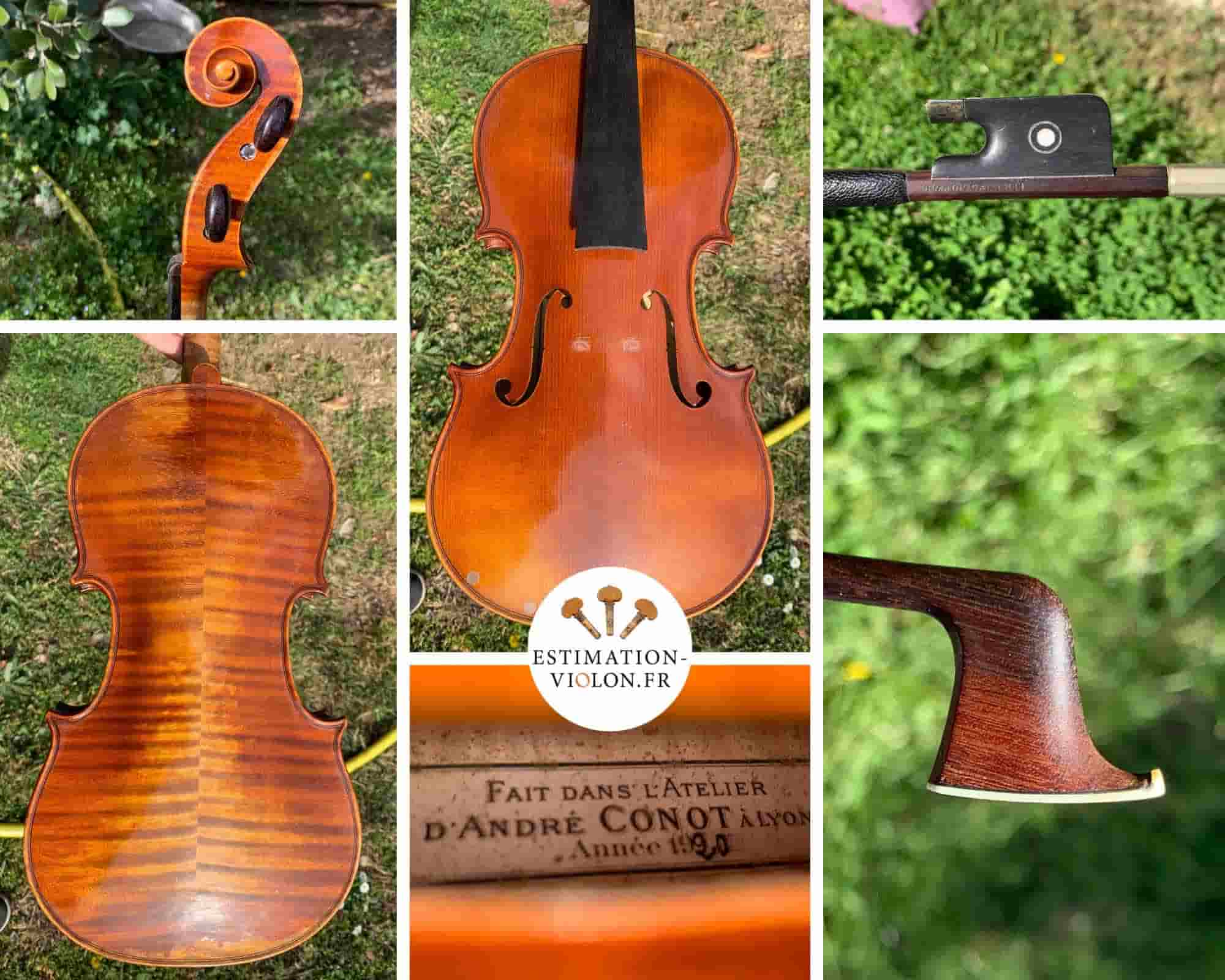
- Photos of the instrument (we have written an article to help you take suitable photos for an appraisal, which you can read here).
- A description of the label.
- The general condition of your instrument and any damage observed.
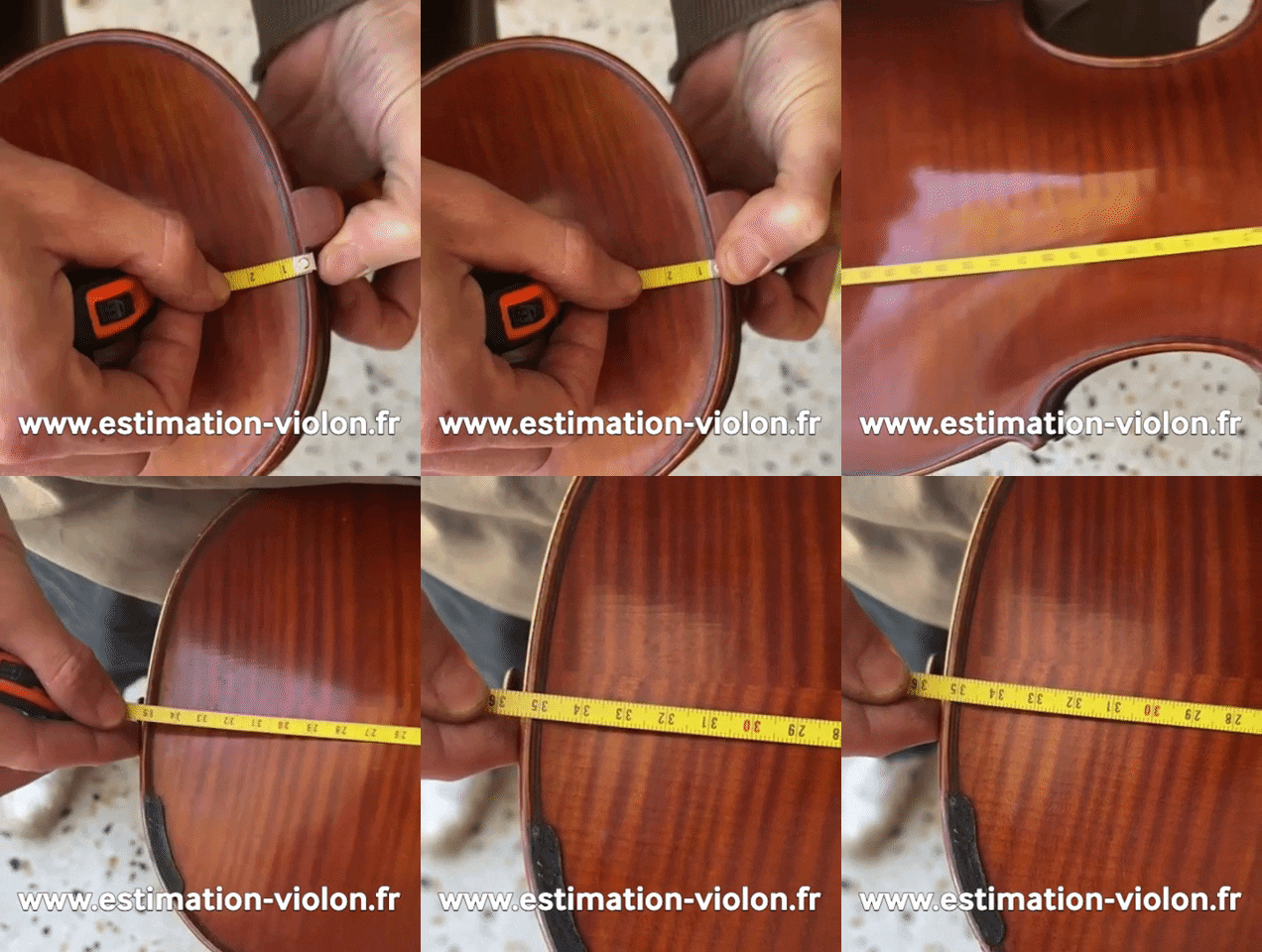
- Its measurements (to find out how to measure your instrument, you can consult our article).
Appraisal of a violin as-is:
Our appraisals take into account the age of your violin or bow, its provenance, the quality of its craftsmanship and its condition. The more precise information and quality photos of your instrument you provide us, the more relevant our appraisal will be. We will give you an idea of the potential market value of your instrument as it is, without restoration costs, if applicable.
These appraisals are based on prices achieved at specialised auction houses worldwide. In our view, this is the best indicator of the violin-making market, which fluctuates every year. These are “trade” prices, often quite different from the “retail” prices charged by luthiers and instrument shops, which offer restored, playing-ready instruments.
How does a violin appraisal for insurance work?
An appraisal for insurance purposes is different. A musician wishing to insure their musical instrument must have a certificate of value, provided by an expert in the field. This appraisal cannot be given from photos.
It requires an in-person examination of the violin or bow. It concerns instruments ready to be played.
These value opinions are generally issued by the maker or seller of the instrument. They may be updated every year depending on the insurer. We do not offer this service.
Have the value of your instrument appraised via our form.

What is an expert assessment of an antique violin?
The expert assessment of an antique violin or bow is more thorough than a photo-based appraisal. Its purpose is to determine, as precisely as possible, the period of manufacture, the provenance, the condition, the tonal potential, as well as the value of an instrument. In some cases, it even allows the maker’s name and date to be established with certainty.
Some experts specialise in violins, others in bows, and some are more qualified than others depending on the period or provenance.
At the end of the assessment, the owner is given a certificate of authenticity and provenance, as well as a certificate of value.
An expert assessment is a paid service, and its price varies according to the estimated value of the instrument. The higher the value, the more costly the service.
What an expert examines during a violin assessment:
During the assessment of a violin or a cello, the expert will inspect the exterior appearance of the violin, any damage, cracks, varnish degradation, retouching, or traces of woodworm. They will also look inside the instrument, using a mirror and an endoscope, searching for traces of repair, woodworm damage, or signatures or branded marks “hidden” inside the instrument. The expert will also assess the tonal potential of the violin based on the quality of the varnish, the woods used, and the setup performed.
They will take all necessary measurements and may even inspect the instrument under different types of light, such as ultraviolet, to detect skilful retouching or restoration, or even the composition of the varnish applied, which is a valuable clue to the provenance and quality of the violin.

What an expert examines during a bow assessment:
The expert inspects the bow in all its main components (frog, button, stick) in order to determine its period and provenance, as well as its potential value. They will assess whether all the parts of the bow are original or whether some have been replaced, and will also take into account any restorations.
They will also determine the quality of the materials used. For the stick, which exotic wood was used: ironwood, snakewood, amourette, or the most prestigious, pernambuco wood. For the frog and button, ebony, elephant ivory or tortoiseshell are mainly found. The same applies to the type of metal used on these parts, which also affects the value of the bow.
For entry-level bows, the metal most often used is nickel or nickel silver. Bows mounted with silver, and even gold, are also found, attesting to a higher level of quality.
Most of these indicators are visible in photos to a trained eye like ours as well, so we can provide you with a free and fast appraisal of a violin or bow’s value if you fill out our form.

Our advice before having your instrument appraised or assessed
A well-maintained violin in good condition will naturally be worth more than one showing significant damage or signs of wear (read our article on the different conditions of a violin).
Before having your violin appraised, you might be tempted to carry out repairs to optimise its value. However, be careful, as repairs performed inappropriately can harm the integrity of your violin, viola, cello or bow, or even decrease its value.
It is essential to call on qualified luthiers and bow makers for any adjustment or repair in order to preserve your instrument.
Do not do anything yourself; leave it “as found” even if the damage seems minor (scratches, etc.), and do not clean it either, even if you find it very dusty.
How do our free online appraisals work?
As experts appointed by the Montpellier Court of Appeal, we have carried out thousands of violin and bow appraisals over the years. Our expertise is recognised, and we are committed to providing accurate and reliable evaluations for every instrument that passes through our hands.
We will guide you through the appraisal process transparently and professionally, providing you with detailed information on the origin and value of your instrument. Our 40 years of experience ensure you receive a fair and reliable appraisal.
If an in-person inspection proves necessary, we take your instrument in for study so that we can examine it carefully, closely looking at its state of preservation, its origin, its tone and its unique characteristics. By working with us to appraise your violin, you will benefit from personalised advice based on our experience and expertise. Do not hesitate to contact us to obtain a reliable appraisal of your antique violin, viola, cello or bow by filling out our form.