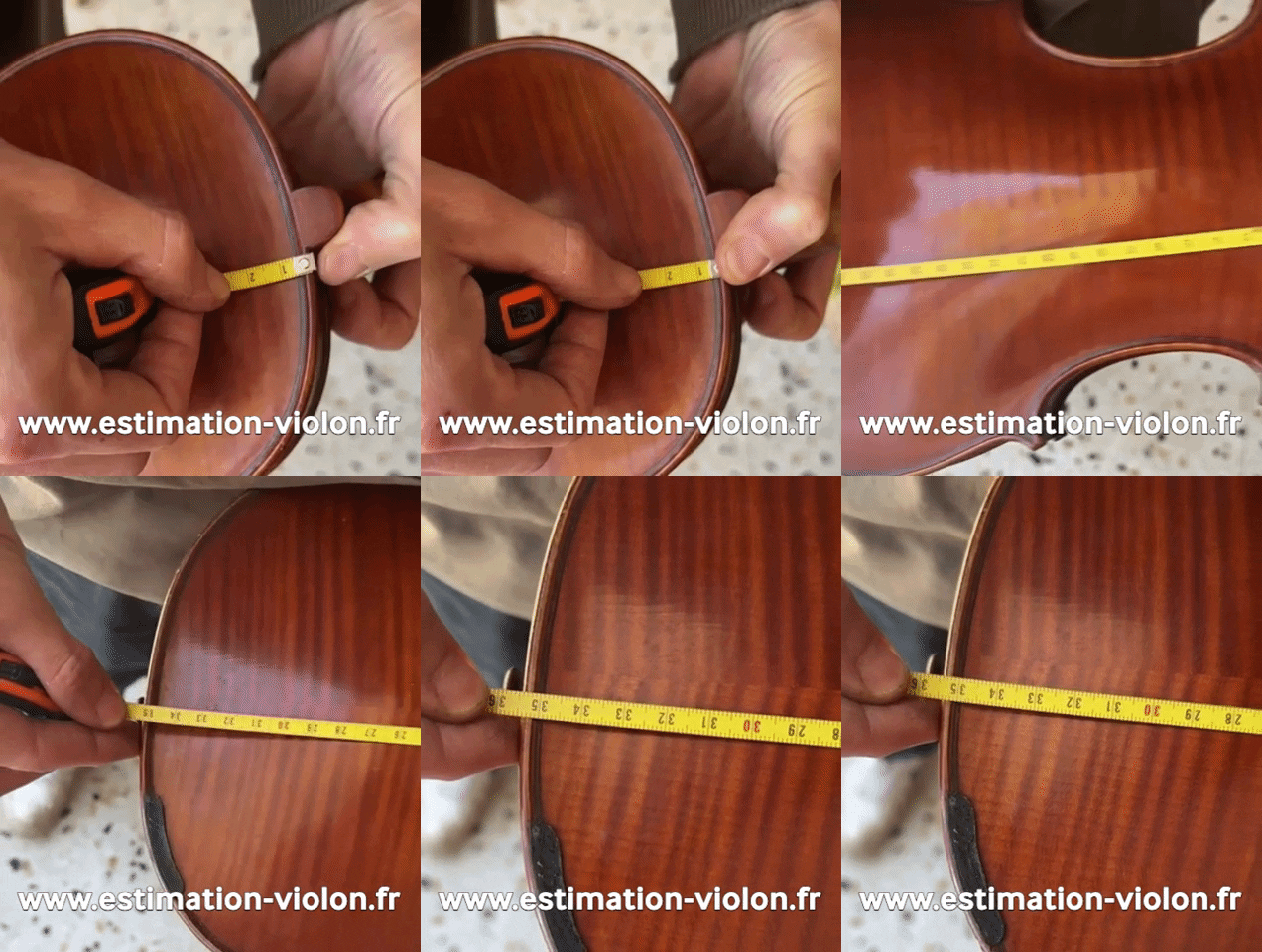
In this article we will explain how to measure your instrument so that you can correctly determine its size.
There are different sizes of violins, violas and cellos; these sizes make it possible to adapt the instrument to the size and age of the musician, particularly for children, but also to provide more comfort for adults.
Moreover, the size of the instrument greatly influences its value; for example: a 3/4 violin or a 7/8 violin will be worth less (as they are less sought after) than a 4/4 violin (learn more about the value of a violin).
What are the sizes of violins, violas and cellos?
The different sizes of violins:
The size of a violin is expressed in fractions (4/4, 3/4, etc.); here are the standard violin sizes and their corresponding body lengths:
- 4/4 (full-size violin): 35.5 cm – 36.5 cm
- 7/8 (so-called “lady’s violin”): 34.3-34.8 cm
- 3/4: 33 cm – 34 cm
- 1/2: around 31-32 cm
- 1/4: around 27 cm
- 1/8: around 23 cm
- 1/10: around 21 cm
- 1/16: around 19 cm
The different sizes of violas:
Violas also come in several sizes; however, unlike violins, there is no standard size for this instrument. There are therefore various dimensions for violas ranging from 38 cm to 43 cm, but the most “classic” body lengths are between 39 cm and 43 cm.
- Large-size viola: 43 cm and above
- Classic-size viola: 40 cm – 42.5 cm
- Small-size viola: less than 40 cm
The different sizes of cellos:
Cello sizes are mainly measured based on the length of the body (as with violins and violas); sizes are also expressed in fractions, ranging from 4/4 (full size) to 1/10 or even 1/16 for the smallest cellos suited to children.
- 4/4 (full-size cello): 70 – 72 cm
- 3/4: 66 cm – 68 cm
- 1/2: 58 cm – 60 cm
- 1/4: 50 cm – 53 cm
- 1/8: 42 cm – 45 cm
- 1/10: 38 cm – 40 cm
- 1/16: 35 cm
Method for measuring a violin, a viola or a cello
To measure your instrument as accurately as possible, we recommend using a sewing tape measure or a retractable tape measure.
If you do not have a tape measure, you can use a simple ruler.
By convention, violins, violas and cellos are always measured on the back (the reverse of the instrument) so as not to be hindered by the bridge, the tailpiece, etc., and to obtain the most accurate measurement possible (to the nearest millimetre).

Measuring a violin, a cello or a viola:
- Hold your violin, cello or viola in one hand, with the back facing you.
- Measure only the body: place your tape measure or ruler at the top, on the side of the neck heel of the violin, cello or viola, then measure the length down to the bottom of the body (just before the end button for violins and violas), at the centre (along the joint). If the joint is visible, try to take the measurement at its level.
Warning: do not measure the neck: unlike some string instruments, only the body is used for the official measurement of a violin, cello or viola. The neck and the scroll are not included in the length.
Would you like an appraisal for your instrument?
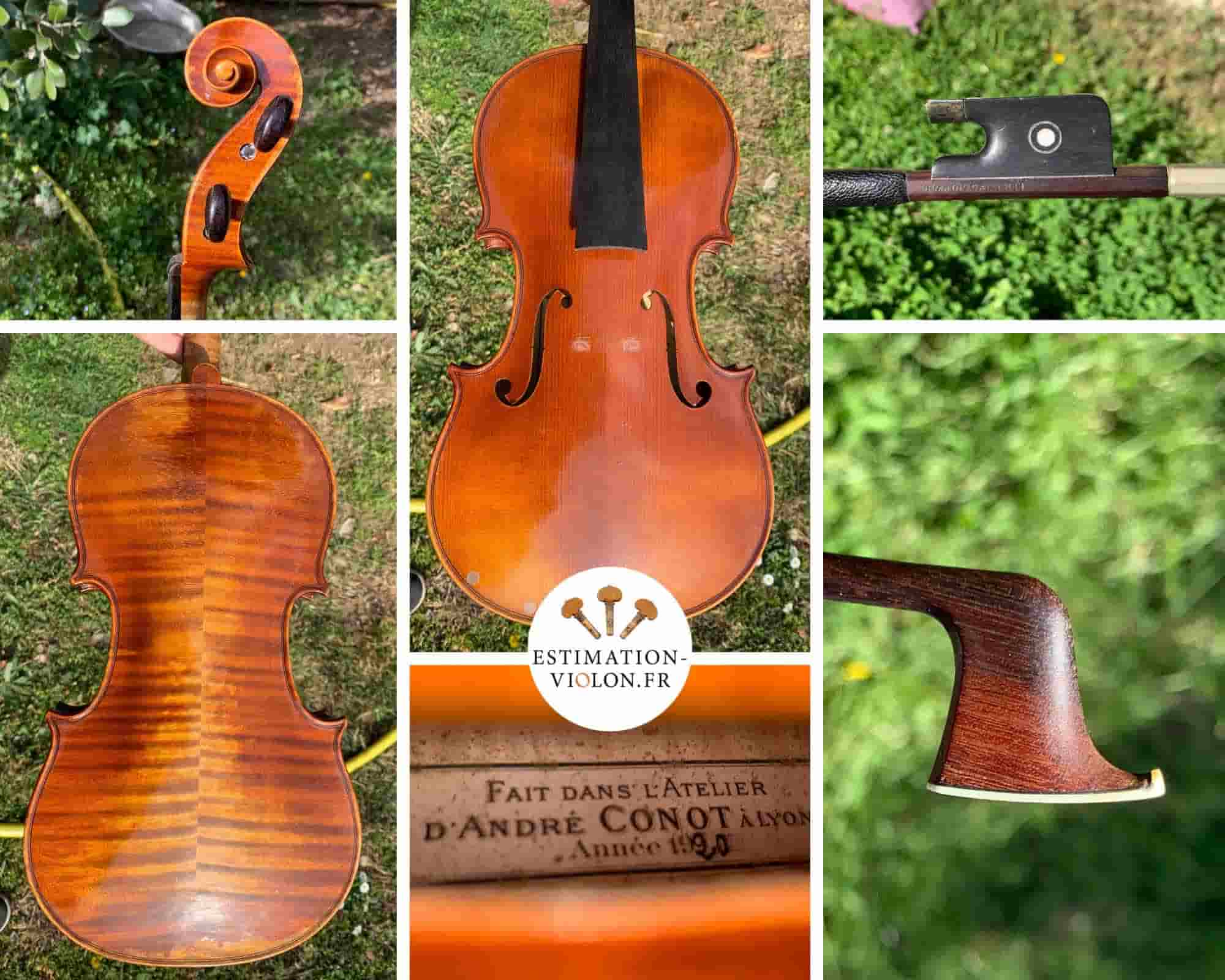
Are your measurements and photos ready (how to photograph a violin)? Send them to us now to get a free, accurate and fast appraisal.
To send your photos:
- Go to our online form.
- Upload your photos.
- Provide the measurements of your instrument.
- Provide information regarding the provenance and any other information in your possession (certificate, repairs, etc.).
- Receive your free appraisal within 48 hours.
Take your time, and if you have any questions, do not hesitate to contact us.